
Reviewed · NORTH CYPRUS DAY TRIPS
Nicosia: Last Divided City, Tour combining South & North
Nicosia is one of Europe’s most unusual city walks: a capital split by a UN-controlled buffer zone, where a short stroll takes you between the Republic of Cyprus and North Lefkosia. This tour brings that division into focus through old inns, churches turned mosques, Venetian fortifications, and the personal stories of guide Eleni Ellinas.
I like the small group limit of 10, which gives you room to ask questions, and I like the way the route links grand landmarks with everyday places such as craft shops, coffee stops, and market buildings. The main consideration is pace: six stops in roughly two to three hours leaves little time for long visits or independent browsing.
Key points to know before booking
- Crosses the city’s divided center: Begin near Agios Dometios and finish at the Ledra Street checkpoint.
- Led by Eleni Ellinas: Expect local context and personal family experience connected to the Green Line.
- Covers six important sites: Büyük Han, Selimiye Mosque, Venetian walls, Kyrenia Gate, Kumarcilar Han, and the Bedesten.
- Best for history-minded visitors: The route connects Ottoman, Venetian, Lusignan, Roman Catholic, and Turkish Cypriot chapters.
- Small group format: A maximum of 10 people should make discussion easier than on a large coach tour.
- Good value for a focused walk: The price is $83.08 per person, with free admission at the listed stops.
Why Nicosia feels different from any other city walk
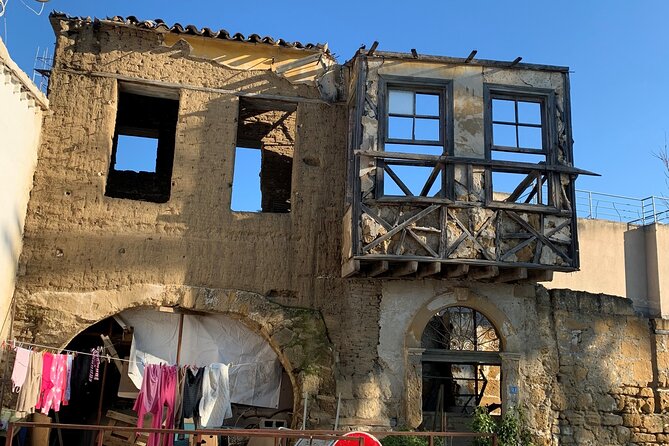
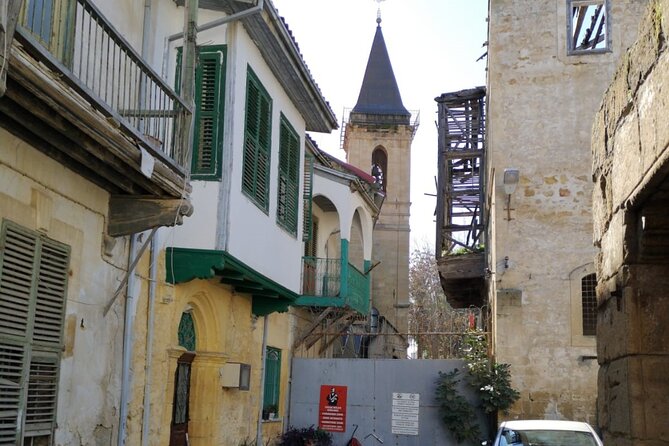
The most important thing to understand is that Nicosia is not simply an old capital with monuments from several eras. Its center is physically divided. The Green Line cuts through streets, buildings, neighborhoods, and memories, and this tour uses the city itself to explain that separation.
You begin at Markou Drakou in Agios Dometios, on the southern side of the city, and finish at the Ledra Street checkpoint. The route therefore has a clear purpose. It is not just a loop around old buildings. You are moving toward the crossing point while learning how Nicosia developed, changed hands, and became the last divided capital in Europe.
Eleni Ellinas is the named guide for the experience. Her approach, based on the information available, combines formal history with personal experience. That matters here. The Green Line is not an abstract political border, and a guide who can explain how the division affects local families gives the walk a more human scale.
The tour is offered in English and normally lasts about two to three hours. That is enough time for a strong introduction to the city, but not enough for long interior visits, leisurely shopping, or a full examination of every monument. You should think of it as a concentrated orientation walk.
Other crossings to the north from Cyprus:
- Ghost-Town Famagusta Mini Bus Tour from Protaras and Ayia Napa
★ 4.5 · 298 reviews - Full-day Famagusta: Lost Cities & Coastal Secrets from Paphos
★ 4.5 · 274 reviews - Nicosia: Green Line and Buffer Zone Guided Walk
★ 5.0 · 147 reviews
Büyük Han, the old inn at the heart of North Lefkosia
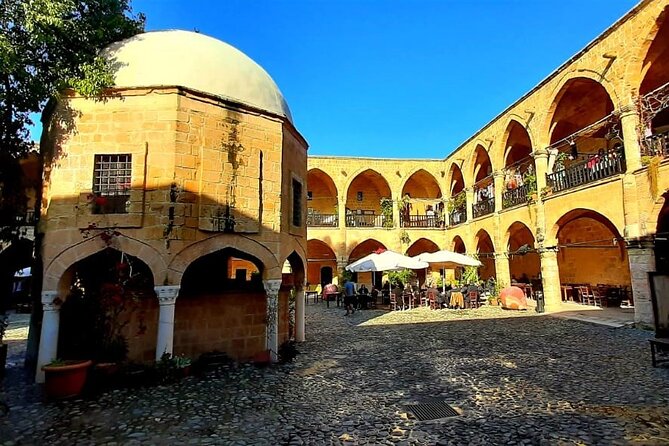
Büyük Han is one of the clearest introductions to the Ottoman character of northern Nicosia. A han was a commercial inn, built to provide rooms and services for people traveling through the city. This one accommodated visitors from Anatolia and other parts of Cyprus.
Today, the building works as an arts center, with galleries, workshops, and craft shops arranged around its courtyard. That change of use gives you something more than a photograph of old stone. You can see how a former place of trade has become a social and cultural meeting point again.
I like this stop because it helps you picture how movement once worked in Nicosia. Merchants, workers, and visitors needed somewhere to sleep, eat, and conduct business. The courtyard design also makes the building easy to understand even if you are not an architecture specialist.
You have about 30 minutes here, the longest scheduled stop on the route. Admission is listed as free. That time should allow you to look around without feeling rushed, though the tour format means you may not have time to browse every workshop in detail.
Selimiye Mosque and its Gothic past
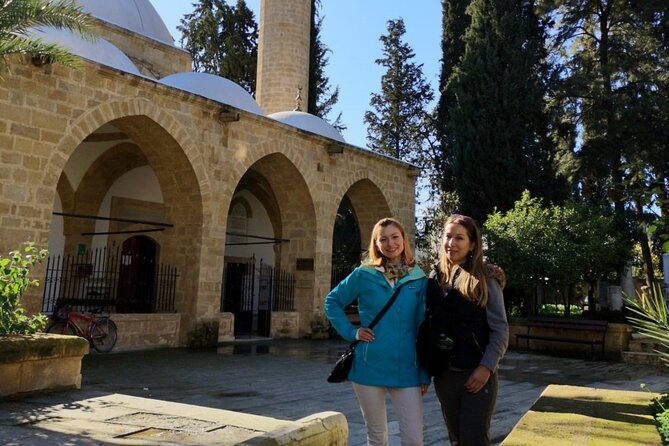
Selimiye Mosque is the largest surviving historic building in Lefkosia and perhaps the most striking reminder that the city’s religious buildings changed with its rulers. It began as the Cathedral of Saint Sophia, a Roman Catholic cathedral, and was later converted into a mosque.
The building combines French Gothic church design with its later Islamic use. That is what makes it so compelling. You are not looking at a structure that fits neatly into one category. Its pointed arches, scale, and cathedral origins sit alongside the identity it gained as a mosque.
The site reaches back to the 13th century, and its long building history reflects the changes that shaped Cyprus. The cathedral was part of the Lusignan and later Venetian period, while the Ottoman period brought its conversion into a mosque.
The scheduled visit lasts about 20 minutes, with no admission fee listed. That is enough for an explanation of the building’s past and a look at its exterior or accessible interior areas, but you should not expect a long architectural study. Dress and behavior should be respectful at any active religious site, even when the building is being visited as a historic attraction.
The Venetian walls and Nicosia’s unusual shape
Nicosia’s medieval fortifications are easy to recognize on a map. The Venetian walls form a distinctive star-like ring around the old city, with bastions projecting from the main circuit. Their unusual shape is one of the city’s signature features.
The walls were rebuilt by the Venetians during the Renaissance, when the Ottoman Empire threatened the capital. Their purpose was practical: protect the city. They also help explain why the old center still feels compact. The fortifications created a clear boundary around the urban core.
You will spend about 20 minutes seeing the walls and hearing how they shaped the old city. This is a useful point in the walk because it shifts the focus from individual buildings to the structure of Nicosia itself. The city’s division today is modern in political terms, but the older walls show that Nicosia has long been shaped by defense, access, and control.
Do not expect a full walk along the entire fortification. The tour only allocates a short visit, so this is an overview rather than a dedicated military architecture tour.
Same harbour, a completely different day:
- Blue Lagoon (Akamas) Bus & Boat Tour with Water Slide from Paphos
★ 4.5 · 2,496 reviews - Cpt Marko – Blue Lagoon & Turtle Cruise with Optional Lunch
★ 5.0 · 1,955 reviews - 100% Cyprus – Tour to Troodos mountains and villages (From Paphos)
★ 4.5 · 1,562 reviews - APHRODITE II -LAZY DAY CRUISE-BLUE LAGOON,TURTLE COVE, with LUNCH
★ 5.0 · 1,395 reviews
Kyrenia Gate and the northern entrance
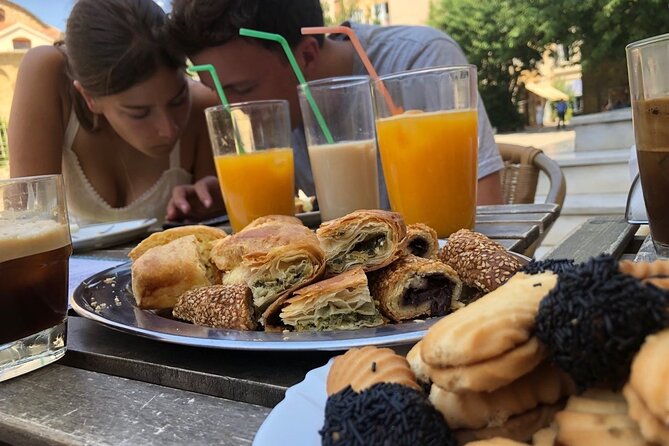
Kyrenia Gate was one of three entrances through the Venetian walls and provided access from the north. It also connects the city’s medieval and Ottoman periods with the more recent division of Nicosia.
The history of a walled capital becomes clearer here. Nicosia was fortified under the Lusignans and later altered by the Ottomans, while the Venetians rebuilt major defenses as the Ottoman threat grew. A gate is more than an attractive old structure. It tells you where people entered, goods moved, and authority was displayed.
The stop lasts about 10 minutes, making it one of the briefest parts of the route. That is enough to see the gate and place it within the city walls, but you will want to listen closely if you enjoy historical detail. The short timing also keeps the whole walk moving toward the central landmarks.
Kumarcilar Han, a smaller Ottoman caravanserai
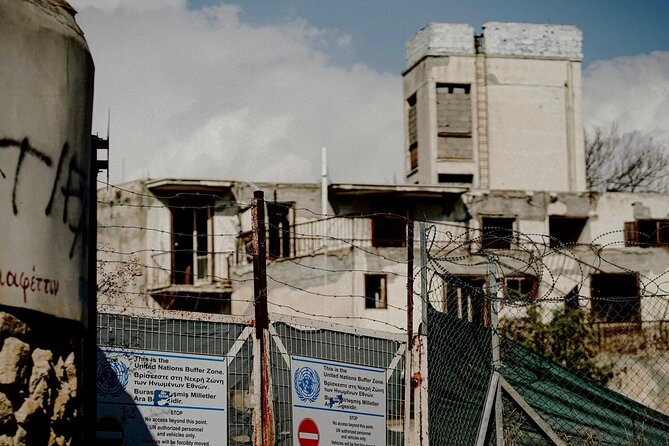
Kumarcilar Han, also called the Gambler’s Inn, gives you a useful comparison with Büyük Han. It was built around the end of the 17th century and is smaller and more modest, but it follows the same general idea of an Ottoman inner-city commercial inn.
The carved gate is especially interesting. It dates from before the Ottoman conquest, and the structure may have been built over an earlier site, perhaps the remains of a monastery. That layering is typical of Nicosia, where later buildings often contain traces of what came before.
The restored han now houses arts and crafts shops. You have around 20 minutes to see it. I like this stop because it prevents Büyük Han from becoming the only example of Ottoman commercial architecture on the route. The contrast between the two inns shows that Nicosia’s old city was not built from one grand plan. It grew through repeated changes and reuse.
The drawback is that the tour does not give you long shopping time. If a particular craft shop catches your eye, you may need to return independently later.
The Bedesten and a thousand years of changing use

The Bedesten, also known as Eski Ayanikola Kilisesi, brings together the city’s religious and commercial past. It began as a church around the 6th century, was expanded and rebuilt between the 12th and 16th centuries, and became a covered market during Ottoman rule.
That sequence makes the building a compact lesson in Nicosia’s changing identity. A church became a market, and the market building now functions as an important historic site. The name Bedesten refers to a covered market, so the building helps show how Ottoman rule reshaped the old center without erasing every earlier layer.
The planned visit lasts about 15 minutes. You will walk around the building and hear why it matters, but the schedule again favors explanation over a long, quiet visit. If you enjoy seeing how one structure can carry several periods at once, this is one of the most rewarding stops.
What Eleni’s guiding style adds
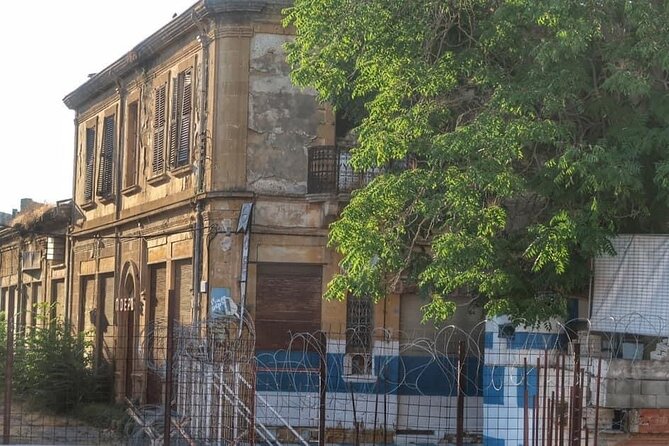
Eleni Ellinas receives particularly strong praise for being warm, attentive, and clear. Those traits are useful on this walk because the subject is politically sensitive and historically complicated. You need a guide who can explain competing histories without turning the tour into a lecture or a political argument.
Her personal connection to Cyprus is also important. The experience includes family stories and local experience related to the Green Line. That can give you a better sense of how the division affects real people, not just maps and monuments.
Eleni also shares practical suggestions connected with coffee, spices, and Cypriot lunch. Those tips are a welcome addition, especially because the official route ends at Ledra Street, an area where you may want to continue exploring on your own.
The maximum group size is 10. That is small enough for questions and conversation, and it suits a subject where you may want clarification. Private-tour pricing can be hard to compare directly with a large group excursion, but the cost of $83.08 per person is easier to justify if you value a personal guide, a cross-city route, and historical context rather than simply ticking off sights.
Timing, walking demands, and the end point
The total duration is listed as approximately two to three hours. The six scheduled visits add up to about 115 minutes, leaving the remaining time for walking, explanations, and the transition between South and North Nicosia.
You should wear comfortable shoes. The route is a walking experience through an old city, and the schedule gives you little reason to expect long seated breaks. Most people can participate, and service animals are allowed. The activity is also near public transportation.
The starting point is Markou Drakou, Agios Dometios, 2369, Cyprus. The finish is the Ledra Street checkpoint at Ledras 68, Nicosia 1010. Because the tour crosses between the southern and northern parts of the city, check the current crossing requirements and bring the documents you need for your own situation before setting out. The provided tour details do not specify those requirements.
The route is offered in English only. It is confirmed at booking, but it requires good weather and a minimum number of participants. If weather or numbers force a cancellation, you are offered another date or experience, or a full refund.
Who should book this Nicosia tour?
I would choose this walk if you want a strong first look at Nicosia’s divided center and prefer a guide-led explanation to wandering without context. It suits history-minded visitors, architecture fans, and anyone interested in how political borders affect ordinary city life.
It is also a good fit if you want both major landmarks and smaller commercial buildings. Büyük Han, Selimiye Mosque, and the Venetian walls provide the headline sights, while Kumarcilar Han and the Bedesten show how daily trade, worship, and local life occupied the old city.
You may want a different format if your priority is extended time inside monuments, detailed religious architecture, or shopping. The route is brisk, and several stops last only 10 to 20 minutes. You will see a lot, but you will not have time to linger everywhere.
Should you book it?
Book this tour if you want Nicosia explained as a living, divided capital rather than a collection of old buildings. The strongest reasons are the small group size, Eleni Ellinas’s personal approach, and the carefully chosen mix of Ottoman inns, Gothic religious architecture, Venetian defenses, and Green Line context.
At $83.08 per person, it is not the cheapest way to walk around Nicosia, especially since admission is free at the listed stops. Its value comes from the guide and the route. If you want local explanation, a South and North itinerary, and a clearer understanding of why Nicosia feels politically and historically distinct, the price is reasonable. If you prefer to explore at your own speed, keep the money for a self-guided walk and return visits to the buildings that catch your attention.
FAQ
Where does the Nicosia tour start?
The tour starts at Markou Drakou, Agios Dometios 2369, Cyprus.
Where does the tour finish?
It ends at the Ledra Street checkpoint, Ledras 68, Nicosia 1010, Cyprus.
How long does the experience last?
The tour lasts approximately two to three hours.
What language is the tour offered in?
The experience is offered in English.
What landmarks are included?
The route includes Büyük Han, Selimiye Mosque, the medieval Venetian walls, Kyrenia Gate, Kumarcilar Han, and the Bedesten, also called Eski Ayanikola Kilisesi.
Does the tour visit both sides of Nicosia?
Yes. It combines the South and North of Nicosia and finishes at the Ledra Street checkpoint.
How many people can join the tour?
The activity has a maximum of 10 participants.
What is the price?
The listed price is $83.08 per person.
Are admission tickets included?
Admission is listed as free at each of the six scheduled stops.
Can I cancel for a full refund?
Yes. You can cancel at least 24 hours before the experience start time for a full refund. Changes or cancellations made less than 24 hours before the start are not accepted for a refund.
Just added around Cyprus
- The Mermaid Cruise by Medusa Cruises – 2:30-Hour Family Adventure★ 5.0 · 11 reviews
- Cyprus Wines Tasting in Larnaca city with Transfers from Ayia Napa and Protaras★ 5.0 · 6 reviews
- Guided snorkeling trip to the turtles in Protaras★ 4.5 · 13 reviews
- Private Scuba Diving Experience in Cyprus★ 5.0 · 13 reviews
- San Antonio Premier Sunset Adults Only Cruise from Protaras★ 5.0 · 6 reviews
- San Antonio Premier Morning Adults Only Cruise from Protaras★ 5.0 · 8 reviews
- San Antonio Crystal Sea Cruise from Protaras★ 5.0 · 14 reviews
- San Antonio Ruby Sunset Cruise from Protaras★ 4.5 · 8 reviews
North Cyprus Day Trips, compared.
Ghost-Town Famagusta Mini Bus Tour from Protaras and Ayia Napa
Read our review →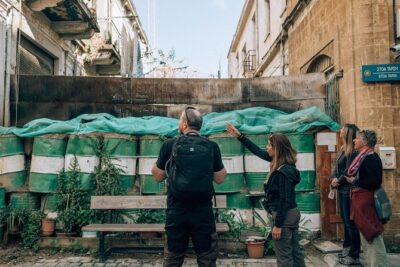
NORTHERN CYPRUS ALL-IN-ONE Private Day Trip from Nicosia
Read our review →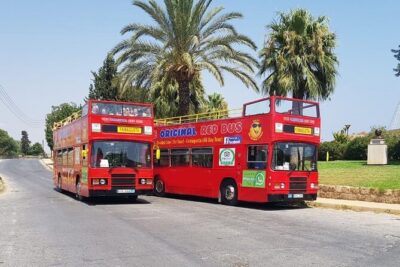
Red Bus Varosha experience in English from Ayia Napa, Protaras
Read our review →
Lefkara & Nicosia’s Divided Past & Present from Paphos
Read our review →
Day Tour to Famagusta, Ghost Town & Ancient Salamis
Read our review →
Browse the lists this tour appears in